


Why Cheap Hotel Amenities Cost You More (And How to Actually Reduce Total Spend)
Cheap hotel amenities often lead to higher operational costs. Learn how to reduce true cost per stay with smarter purchasing, better-quality products, and efficient bulk strategies.
When it comes to managing hospitality costs, amenities often seem like an easy place to cut corners. After all, switching to lower-cost toiletries or cheaper towels looks like an immediate win on paper.
But in practice, many hotel owners and Airbnb hosts discover the opposite: the cheapest option often leads to higher total costs over time.
The problem isn’t the upfront price—it’s everything that happens after the purchase.

The Illusion of Saving Money on Low-Cost Amenities
Most purchasing decisions in hospitality start with a simple comparison: price per unit.
If one bottle of shampoo costs $0.18 and another costs $0.32, the cheaper option seems like the obvious choice.
But this thinking ignores critical variables:
- How often the product is used
- How guests perceive it
- How frequently it needs to be replaced
- The operational impact on your staff
In reality, your true cost isn’t what you pay per item—it’s what you spend per guest stay.
Where Cheap Amenities Actually Increase Costs
Guest Complaints and Replacement Cycles
Low-quality toiletries and linens are noticed immediately.
Watery shampoo, harsh soap, or rough towels don’t just create a mediocre experience—they generate complaints. Guests request replacements, housekeeping gets pulled into additional service tasks, and inventory gets consumed faster than expected.
That “cheap” shampoo? You may end up using twice as much per stay just to meet basic expectations.
Negative Reviews and Lost Future Revenue
Amenities might seem like small details, but they consistently show up in reviews.
Phrases like:
- “Cheap toiletries”
- “Thin, worn-out towels”
- “Low-quality bathroom products”
…can quietly damage your ratings over time.
For Airbnb hosts and boutique hotels especially, these details influence booking decisions. A small saving of a few cents per unit can translate into fewer bookings—or pressure to lower your nightly rate.
Waste, Leakage, and Overconsumption
Lower-cost products often come with hidden inefficiencies:
- Poorly sealed bottles that leak in storage or transit
- Flimsy packaging that breaks or deforms
- Products that require guests to use more per application
For example, low-quality body wash may lack concentration, leading guests to use larger amounts. Multiply that across dozens or hundreds of stays, and your “budget” option becomes a high-consumption product.
Switching to better-designed packaging—such as leak-resistant travel-size bottles or controlled pump dispensers—can significantly reduce this waste.
Durability Issues with Linens and Accessories
The same principle applies to towels and other room essentials.
Cheaper towels:
- Lose softness quickly
- Break down faster in laundry cycles
- Require more frequent replacement
This creates a cycle of hidden costs:
- Increased purchasing frequency
- Higher laundry inefficiency
- Inconsistent guest experience
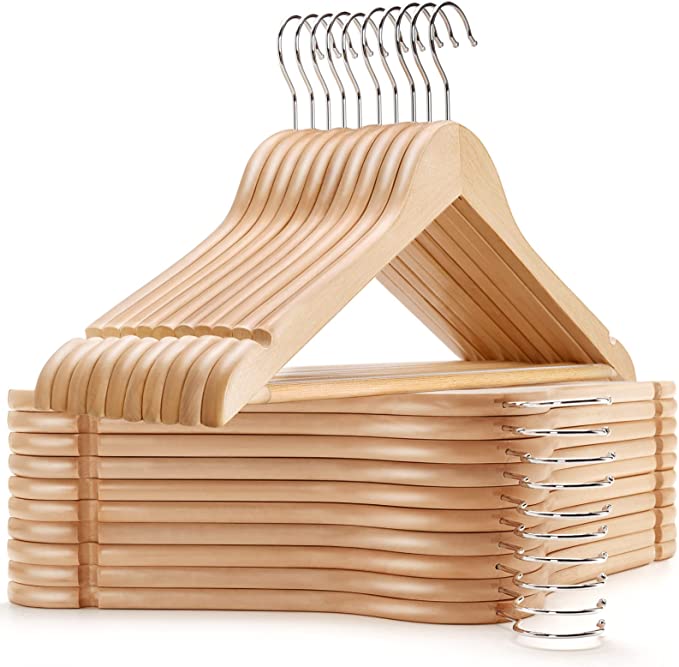
A slightly higher upfront investment in durable, high-quality towel sets often results in a lower cost per use over time.
Cost-Per-Stay vs Cost-Per-Unit: The Metric That Actually Matters
If you want to control spending effectively, you need to shift your mindset.
Breaking Down the Real Cost Formula
Your true amenity cost looks more like this:
Cost per stay = (unit cost × units used per stay) + replacement costs + operational impact
This includes:
- Extra products used due to poor quality
- Replacements requested by guests
- Staff time handling complaints or restocking
Example Comparison
Consider this simplified scenario:
Cheap shampoo:
- Lower unit price
- Guests use more per stay
- More complaints and replacements
Mid-tier shampoo:
- Slightly higher unit price
- Lower usage per stay
- Fewer complaints, better reviews
In many cases, the mid-tier option ends up being cheaper per stay—and far more valuable in terms of guest satisfaction.
How to Evaluate True ROI When Buying Amenities in Bulk
Look Beyond Unit Price
Instead of asking “What’s the cheapest option?”, ask:
- How long does this product last per guest?
- Does it meet guest expectations?
- Will it reduce complaints and replacements?
Consistency is key. A well-presented, reliable set of amenities creates trust—and reduces variability in your operations.
Standardization and Bulk Efficiency
Standardizing your amenities across all rooms simplifies everything:
- Faster housekeeping processes
- Easier inventory management
- Predictable usage patterns
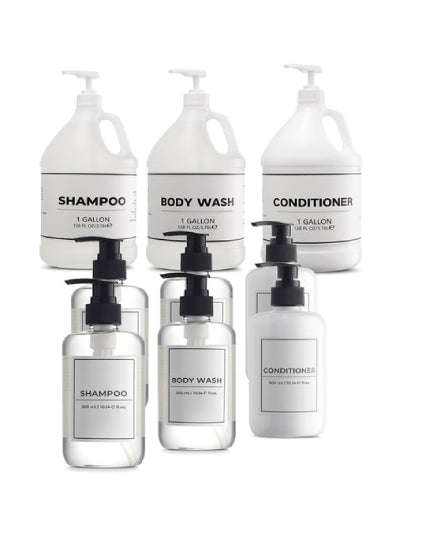
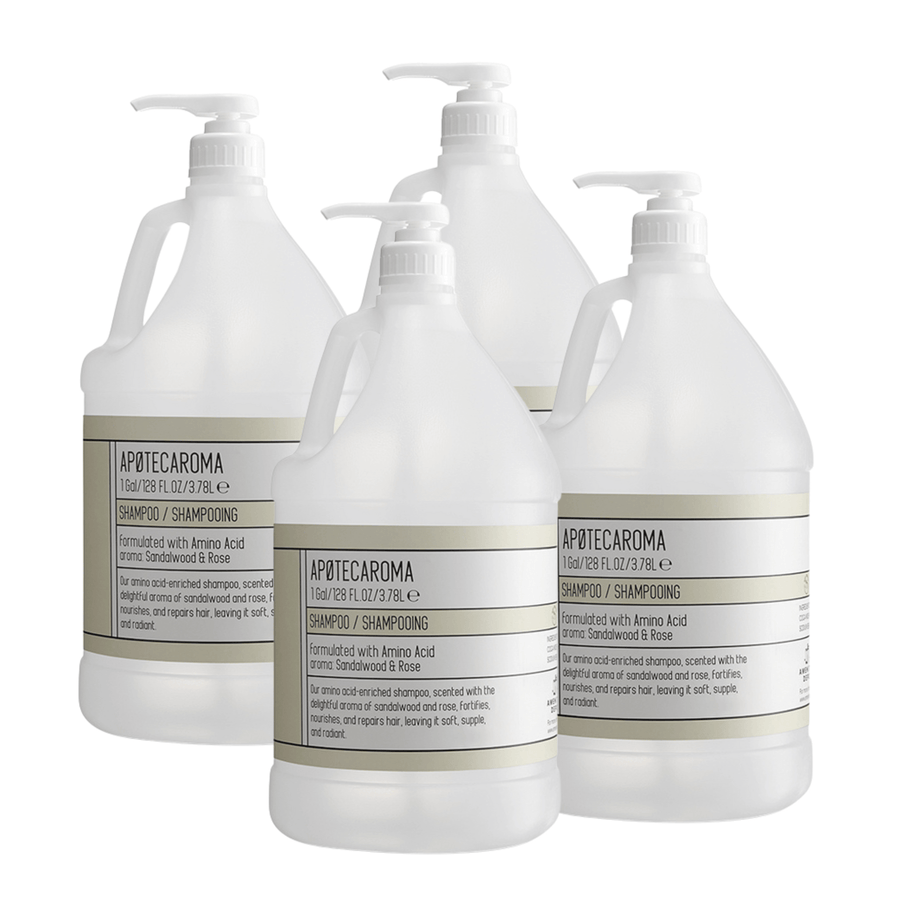
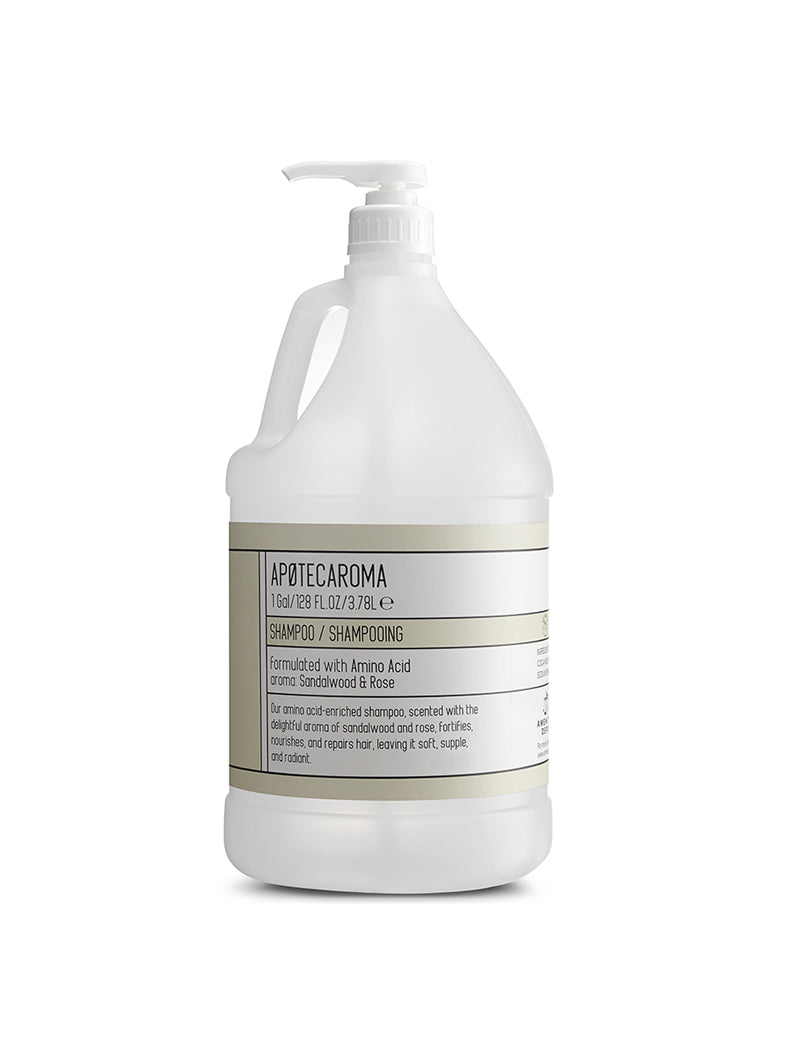
Using structured options like amenity kits or bulk refill systems (such as gallon dispensers from White Label collections) helps reduce both cost and complexity.
Choosing the Right Product Formats
Different property types benefit from different formats:
- Hotels & motels: Travel-size toiletries or branded collections for consistency
- Airbnbs & extended stays: Pump dispensers or refillable systems to reduce waste
- Boutique properties: Premium-feel products that enhance perceived value
Flexible solutions—like travel-size sets, pump dispensers, or bulk refill options—allow you to match your format to your operational model.
Smarter Ways to Reduce Total Spend Without Sacrificing Quality
Invest in Mid-Tier, High-Consistency Products
The goal isn’t luxury—it’s reliability.
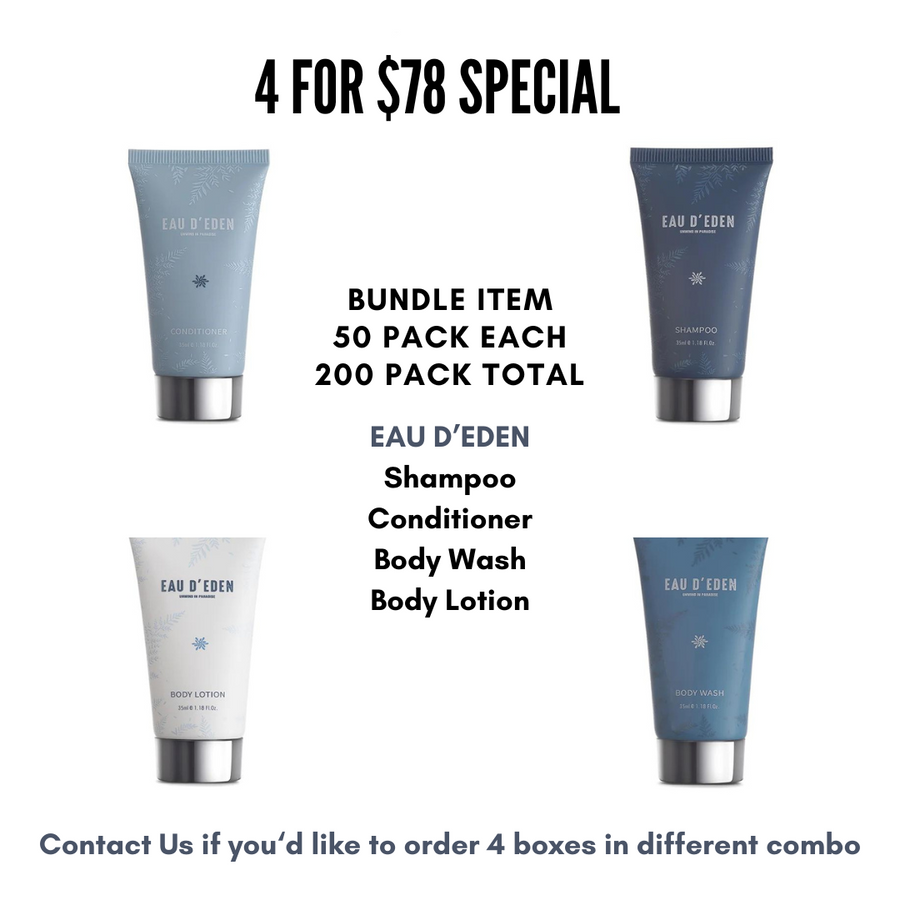
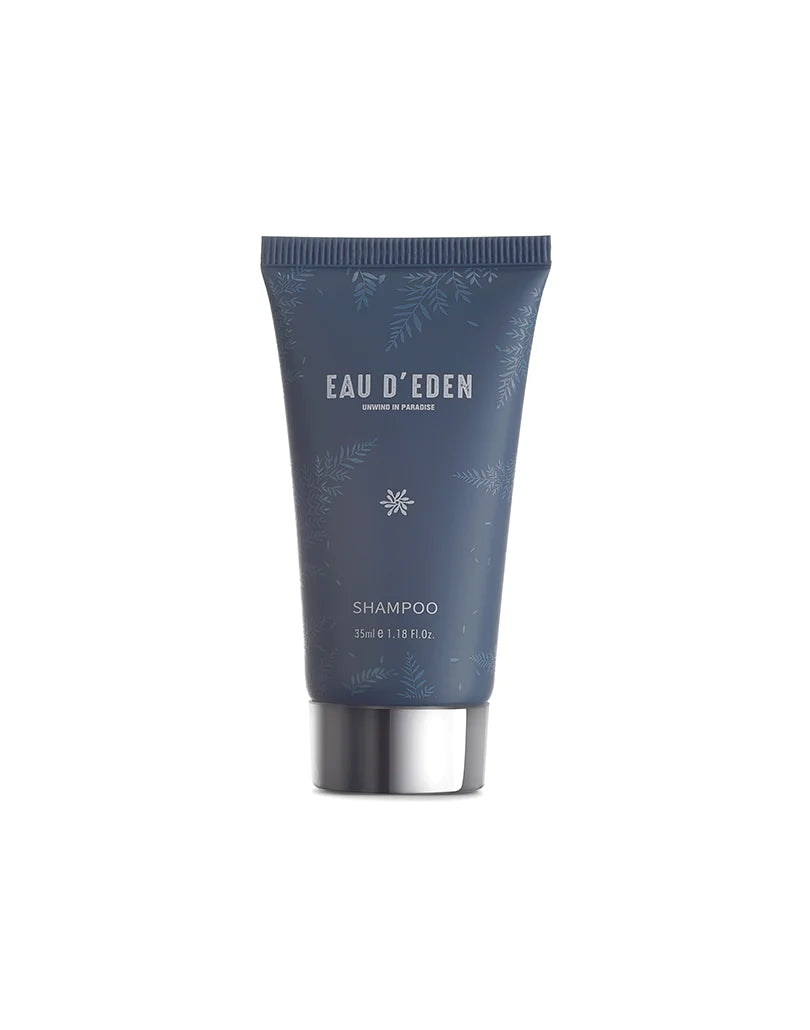
Collections like APOTECAROMA, EAU D’EDEN, and White Label products are designed to strike that balance:
- Consistent guest experience
- Professional presentation
- Controlled cost per stay
Reduce Waste with Better Packaging
Packaging plays a bigger role than most operators expect.
Options like:
- Leak-resistant bottles
- Recyclable paper pouches (such as Biocorn products)
- Refillable dispensers
…can significantly cut down on product loss while also supporting sustainability goals.
Bundle and Standardize Supplies
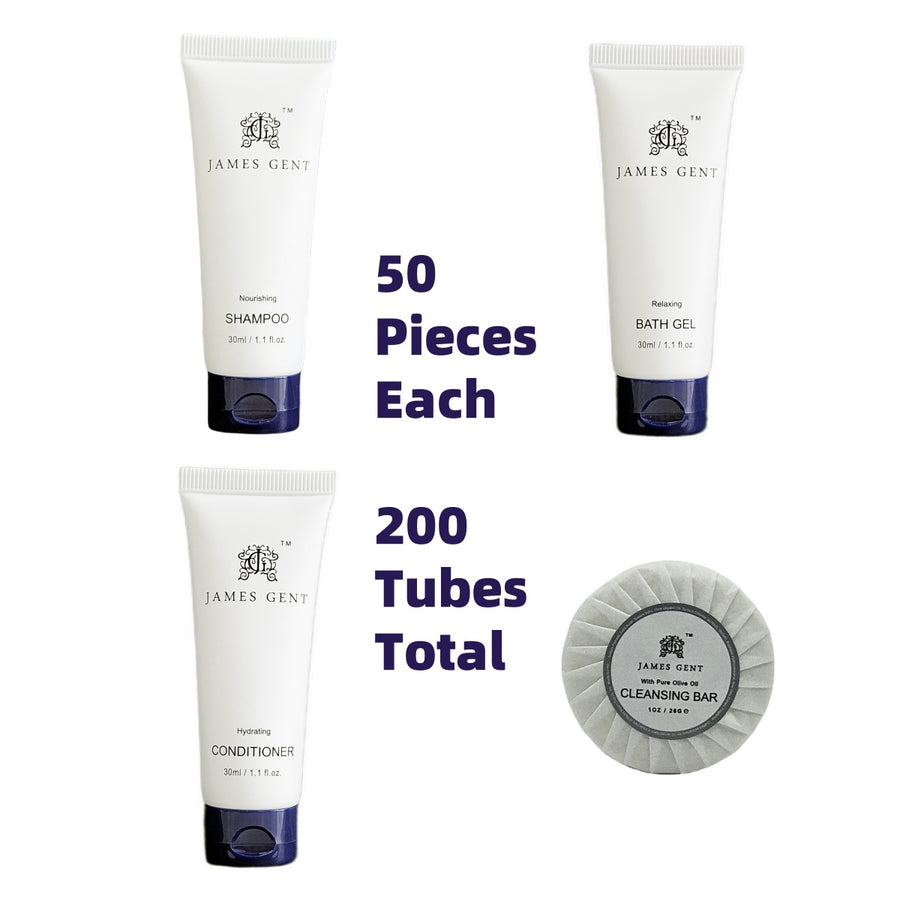
Using pre-arranged amenity kits or bundled purchases helps:
- Reduce ordering complexity
- Maintain consistency across rooms
- Avoid overstocking mismatched items
It also ensures that every guest receives the same experience—without operational guesswork.
Align Amenities with Property Type
Over-spending and under-spending are both costly.
- A budget motel doesn’t need luxury spa products
- A boutique Airbnb shouldn’t feel “cheap”
- Extended-stay units benefit from larger, refillable formats
Matching your amenity level to guest expectations is one of the most effective ways to control costs without sacrificing satisfaction.
Final Takeaway: Cheap Isn’t Cheap
Cutting costs on amenities might look efficient in a spreadsheet—but in real operations, it often leads to higher spending, more complaints, and weaker reviews.
The most successful hospitality operators shift their focus:
- From lowest price per unit
- To lowest total cost per stay
By choosing better-quality products, reducing waste, and standardizing your approach, you can actually spend less—while delivering a noticeably better guest experience.